A Different Type of Crypto

If you read my first post, you’ll remember I talked about building things that solve daily pain points. This first project isn’t quite solving a problem, but it presents something to solve.
I married into a family of puzzle aficionados, and now my wife and I live 4,000 miles away in Switzerland.
Every morning at my in-laws’ home in central Pennsylvania, printed puzzles appear on the kitchen table like clockwork, labeled with the names of each family member in attendance. There are three puzzles of interest: the daily crossword, a word jumble, and a cryptoquip. As everyone stumbles downstairs, we sip half-caff coffee and work in silence. My wife solves hers before her mug is empty. Others (me) take hours. My father-in-law has already finished them all in his head and walks around peering over shoulders, either offering subtle hints or laughing from his belly at how wrong you are.
This tradition has run for as long as I’ve known my wife, over 10 years now. It’s one of my favorite things about visiting. But visits are rare these days, and with an absence of free options online for my wife’s favorite puzzle format, I thought: how can I recreate this experience, but in my pocket?
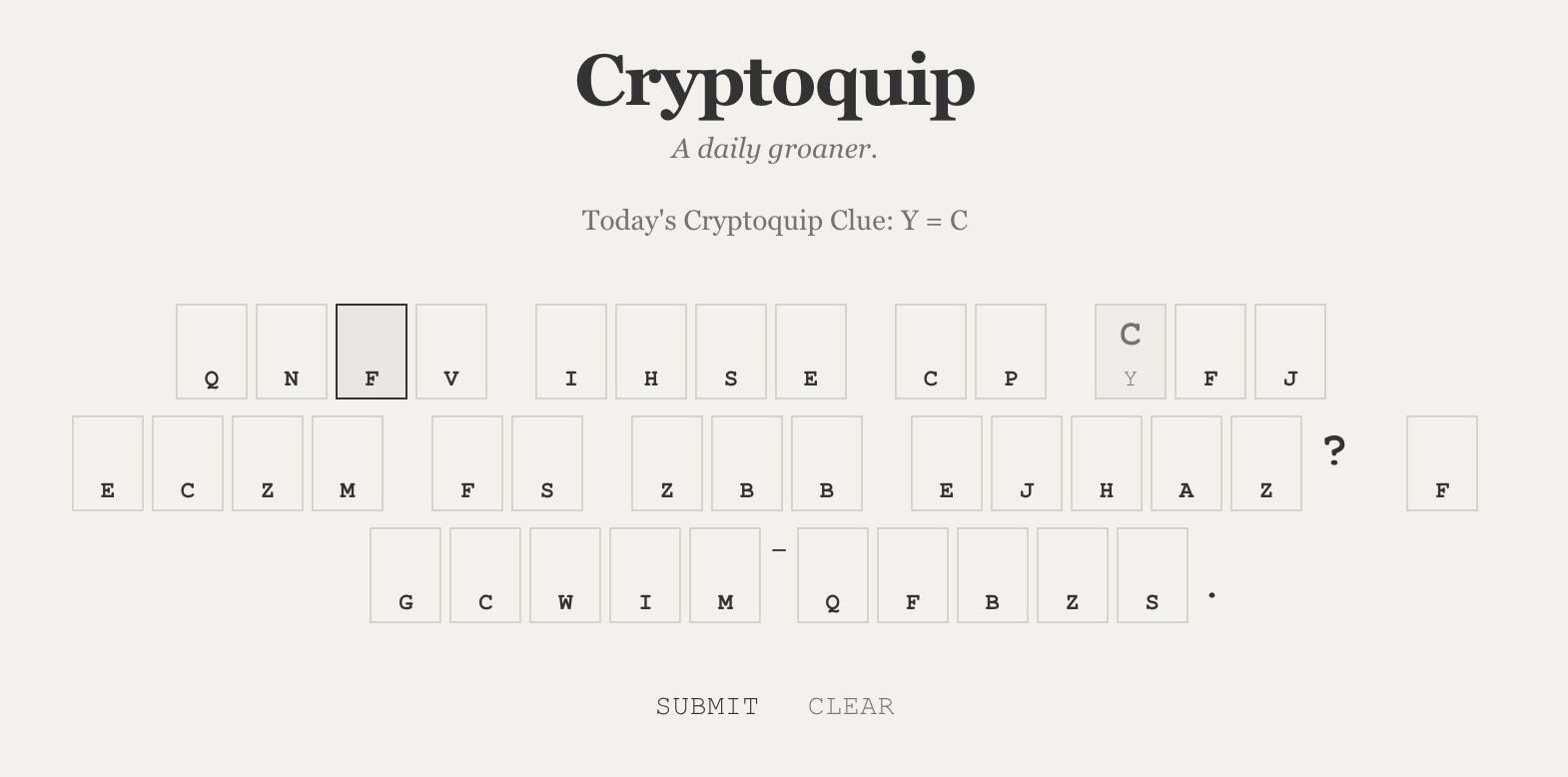
Enter: my very first website build. A mobile cryptoquip powered by Lovable.
The Build
I wanted something intentionally simple. After all, I was trying to recreate a newspaper puzzle; how many bells and whistles do you really need?
Lovable does a great job of running with your idea. After my initial prompt, it came back with a series of clarifying questions: Should the puzzles be AI-generated? Include a hint system? Track stats? Show a leaderboard? User accounts? I answered enthusiastically.
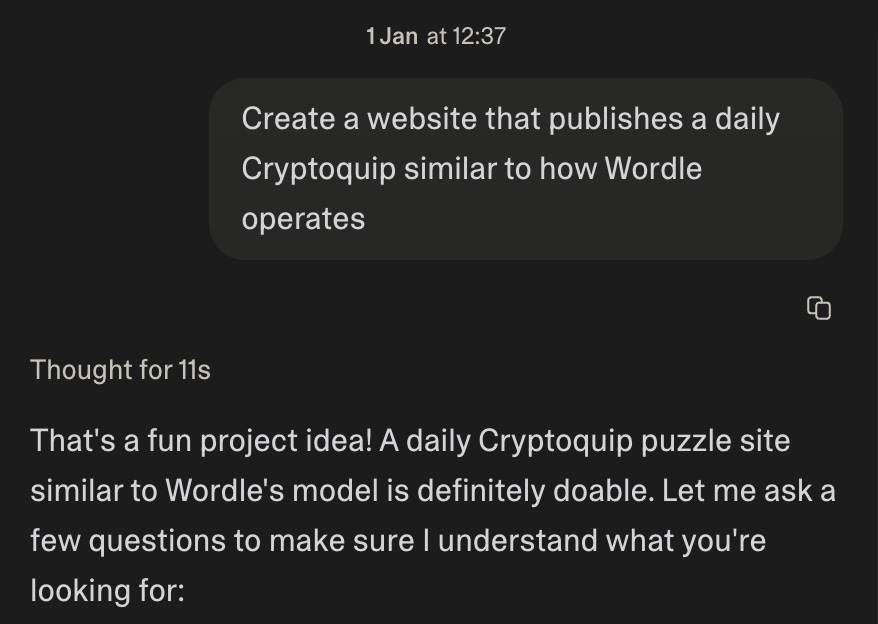
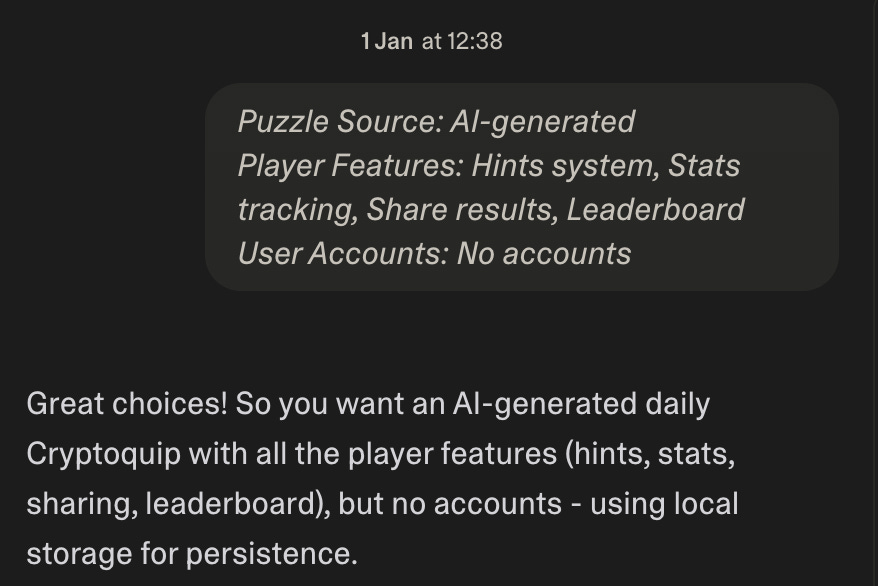
And then, BAM. The first version spun up in minutes.
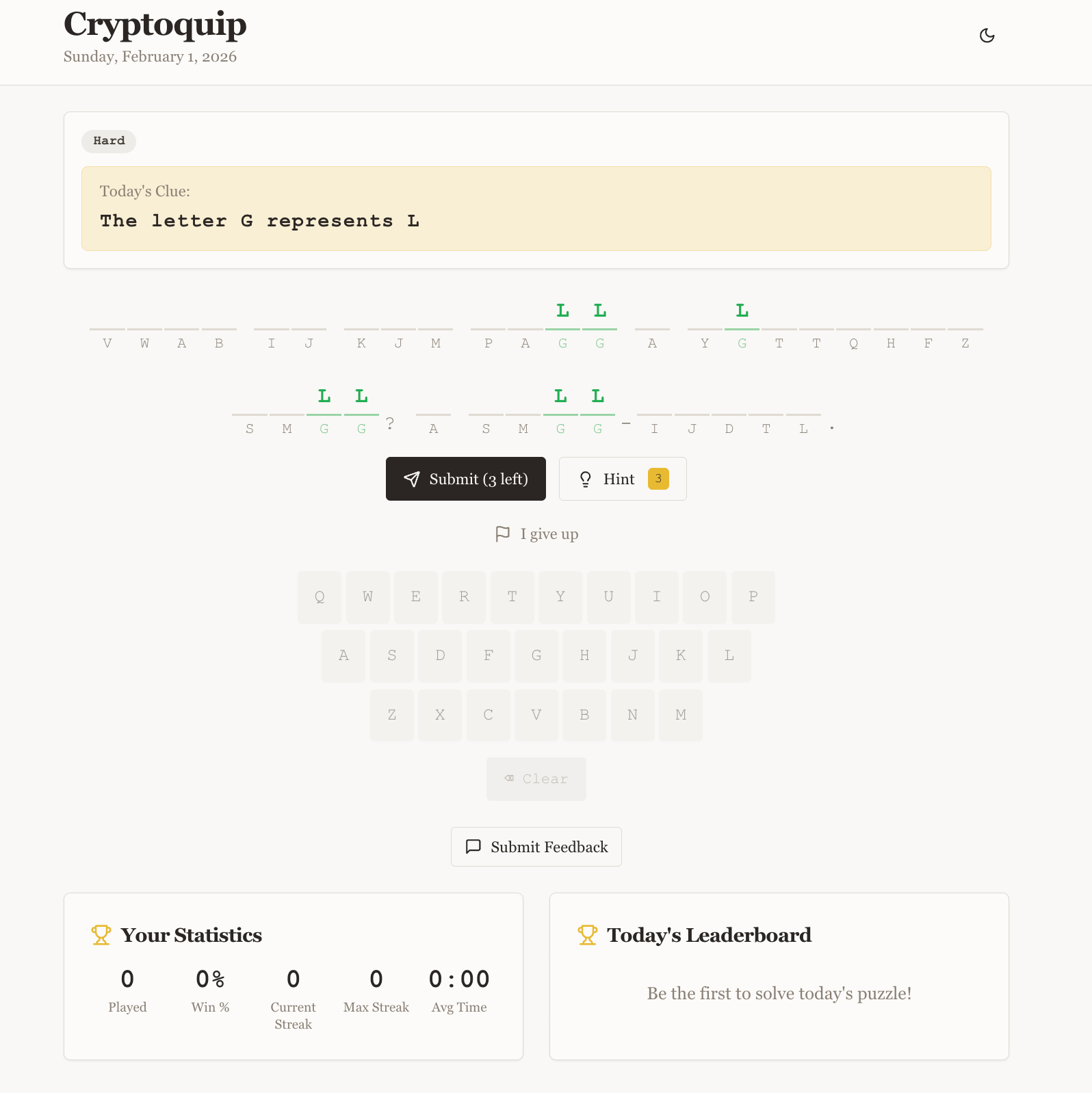
As you can see, I got greedy. I asked for all the extra things even though I wanted “simple.” After dealing with a slurry of bugs and spending way too many prompts debugging features I didn’t need, I realized the best move was to cut them out entirely.
Which brings me to my first learning: when you’re building with AI, scope creep happens at the speed of thought. You’re not constrained by what you can code, you’re only constrained by what you can imagine. And that’s dangerous when you’re a non-technical hobbyist burning through credits.
At the time of writing this, I sent 116 messages to Lovable, which resulted in 56 AI edits, 91.90 credits used, and 113 commits in GitHub. Is that good, bad, or really bad? I genuinely don’t know. Someone can roast me in the comments.
Most of those messages were spent tweaking little things: “center the text on the page,” “darken the font of the cipher letters,” “remove the leaderboard.” But the most time-consuming task was: “create a new list of puzzles based on the following criteria...”
Where AI Struggles
Here’s the thing: I knew from the start I wasn’t going to have amazing AI-generated puzzles.
From my limited research, it appears King Features has a chokehold on newspaper cryptoquip content - they’ve copyrighted every puzzle I could find online. And honestly? They’ve earned it. They blend the perfect amount of punniness and dad-joke groaning, all while staying original. I didn’t want a cease and desist on my very first AI project, so I tried to train AI to be clever and punny instead.
If you’re wondering how that went, here are some zingers:
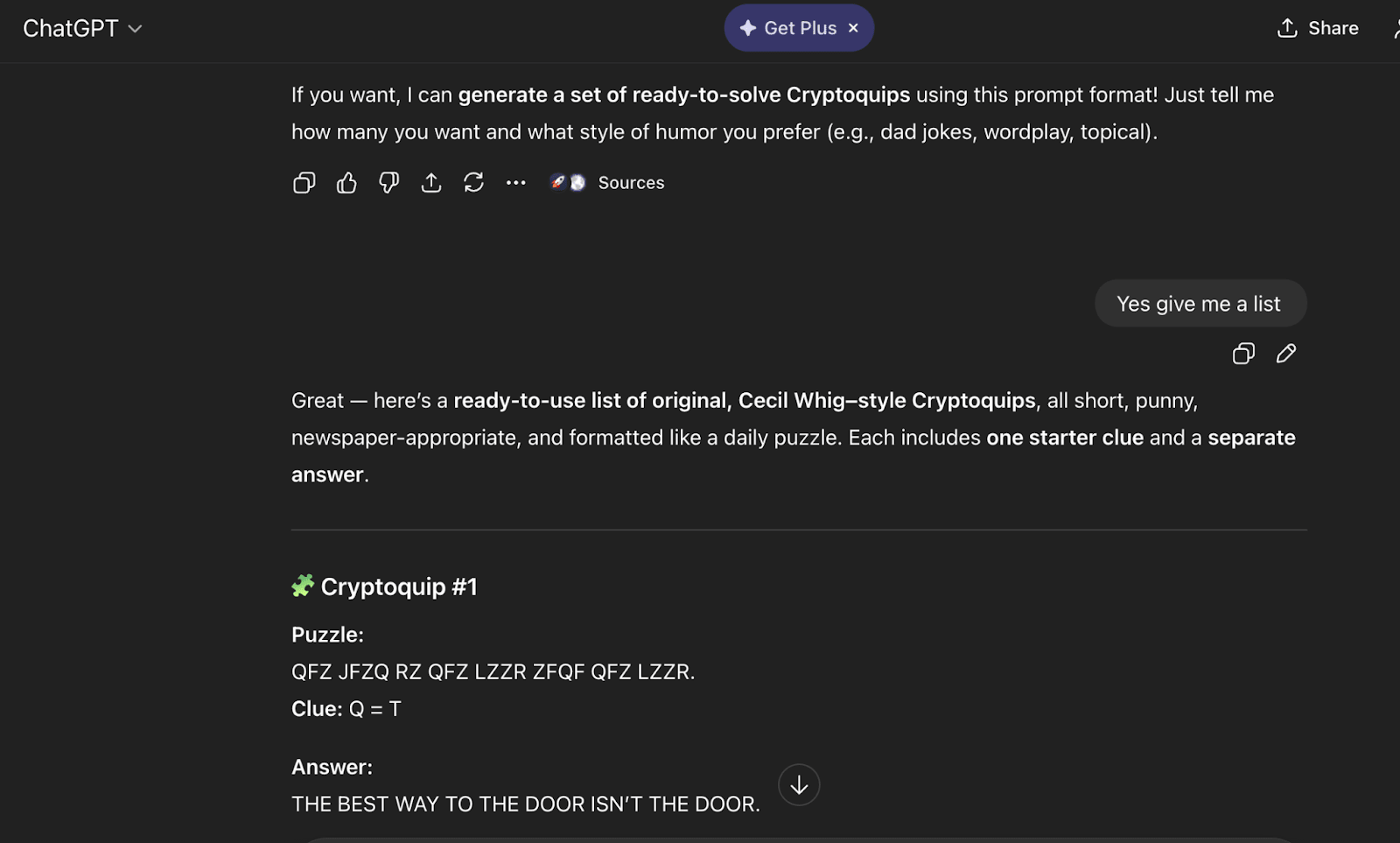
In ChatGPT’s defense, I should’ve known the free version wasn’t going to deliver A+ content. But okay, maybe Claude Code Pro would prove worthy?

Numbers 7 and 10 had me howling - - either because I have a simple sense of humor, or because I was running on fumes when I asked for these results.
This is where I learned something important about AI: it’s exceptional at binary, structured tasks - - build a website with XYZ criteria, generate text with a specific character count, adhere to strict cipher rules. But the creative element? That’s where it falls apart. The difference between AI cryptoquips and newspaper-grade puzzles is human wit. Cleverness. Surprise.
Ben Affleck touched on this recently on Joe Rogan’s podcast when talking about AI in Hollywood. He said AI can help with crafting and efficiency, but it can’t create the spark - - the thing that makes you laugh or think differently (He was less diplomatic about it, but you get the idea from the examples above.) That’s the human part. I felt that keenly while trying to coax puns out of a language model.
Despite these terrible attempts, I managed to curate a list of a few hundred quips (some AI-generated, some edited, some I wrote myself). They’re now live on the site. Some are as corny as the ones above. Others are... slightly less corny.
The Lovable-GitHub Confusion
One of the last things I did was set up a GitHub repo and practice writing commands in Terminal (I’m a Windows user by heart - shoutout to all my accountants - so this was a fun side quest). I then took my full repo and submitted it to Claude Code for a sanity check: what’s working well, what’s unnecessary, where can we refactor?
What I didn’t realize is that Claude Code doesn’t talk back to Lovable.
After making hours of edits in Terminal, I checked my Lovable project URL and... nothing had changed. That’s when I learned the hard way that Lovable is a one-way app - - it writes to GitHub, but independent changes in your repo don’t write back.
So now I have Claude Code review my work and provide me with Lovable prompts to implement the changes. An extra step, but it works.
The Security Warning Loop
The other oddity I encountered: security warnings. Lots of them.
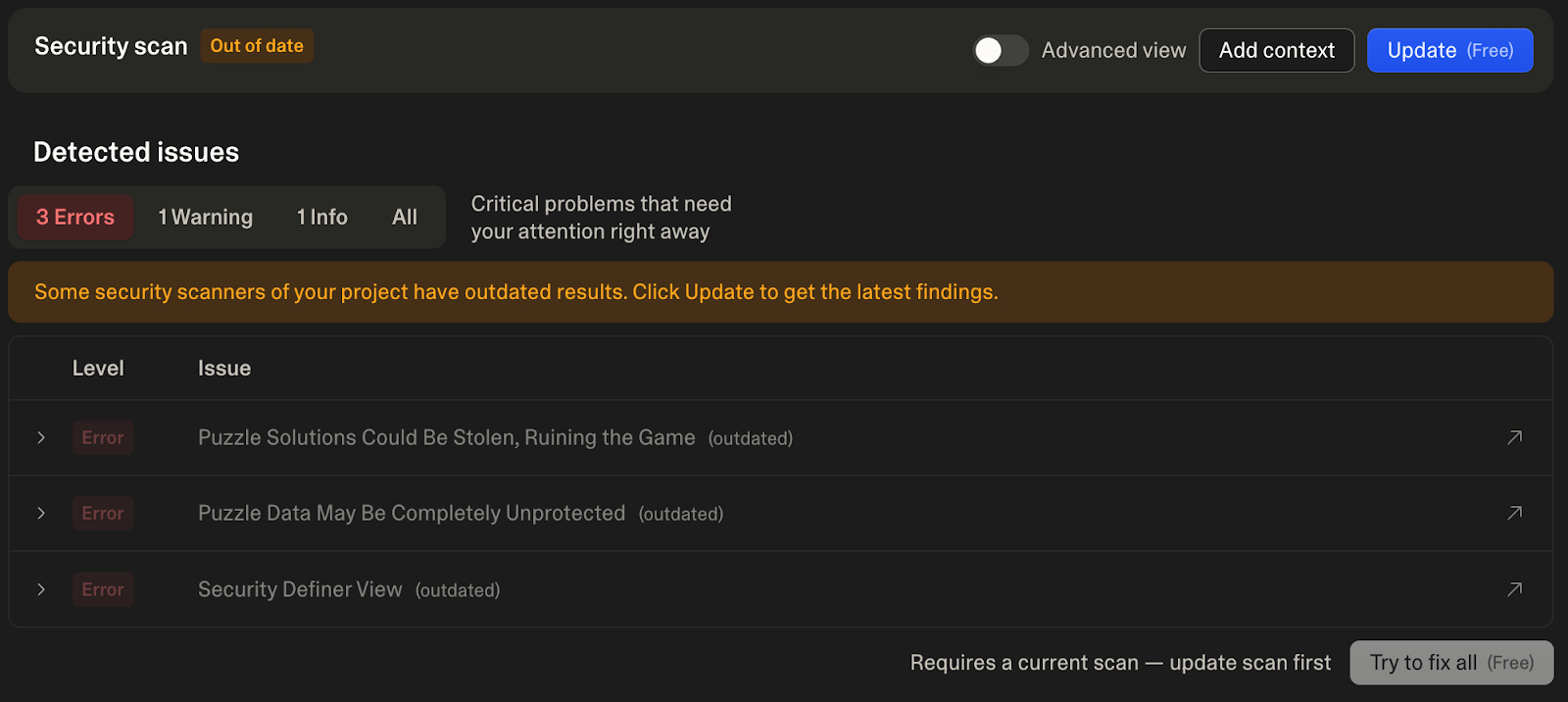
Maybe this was user error, but it seemed like every time I made a few changes to the website, the same security fixes kept popping up. Lovable has a nice feature that lets you scan and fix these errors automatically, but I swear they weren’t actually fixing them in a scalable way - - just patching them temporarily. Which meant I kept burning credits to fix the same issues over and over.
I eventually stopped obsessing over this and accepted it as part of the learning curve.
So What’s My Takeaway?
These tools are amazing.
I can’t speak for my technical friends and colleagues, but I imagine this is up-leveling their lives significantly. I could’ve stopped after 15-20 minutes in Lovable and had exactly what I was looking for.
I don’t know whether to be scared or excited that this technology didn’t exist a year ago. Where will it be 6 months from now? 5 years?
While I did most of my build in Lovable, I also experimented with ChatGPT, Claude Code, and Manus AI. This is where I struggled most. Lovable was great at turning my idea into a usable website, but where should I turn for content creation? Code review? General sparring? There are so many tools, and I wasted time and credits bouncing between them.
For my next project, I’m going to be more structured about which apps I use for what, and more specific in my prompts to avoid burning through credits unnecessarily.
But for now? I built something, in a few days. With no coding experience - and it works.
Try it yourself: Daily Cryptoquip
Give the daily puzzle a shot (or browse the archive). Tell me which puzzles are terrible. Tell me what works and what doesn’t. I’d love your feedback - - it’ll help shape what I build next.
Up next: a project that actually solves a pain point in my life. More to come soon.
Build Stats
Tool: Lovable (primary), ChatGPT, Claude Code, Manus AI
Messages sent: 116
AI edits: 56
Credits used: 91.90
GitHub commits: 113
Investment: A few weekends, several dozen coffees, and a supportive wife who doesn’t mind me tinkering while she’s feeding our newborn
Live app: daily-crypto-charm.lovable.app